
"planting Sea"
10000 article(s) found

Introduction of Valenford Manor in the Caribbean Sea in the Blue Mountain Coffee region of Jamaica
In 1717 King Louis XV of France ordered coffee to be grown in Jamaica, and in the mid-1920 s, the Governor of Jamaica, Nicholas. Nicholas Lawes imported Arabica seeds from Martinique and began to plant them in St. Andrew. To this day, the St. Andrews area is still the Jamaican Blue Mountain Coffee.

A brief introduction to the Camellia Girl Manor in El Salvador where coffee is planted at an altitude of about 90-1500 meters above sea level
El Salvador boutique coffee is concentrated in the volcanic rock producing areas of Santa Ana in the west and Charantanan fruit in the northwest. In recent years, the top 10 cup tests are almost entirely from these two producing areas, with an altitude of about 9-1500 meters, mainly bourbon (68%). Followed by Pacas (29%), mixed-race Pakamara, Dulaai and Kaddura accounted for only 3%. Salvadoran mixed race Pacama

Indonesian Mantenin Coffee Bean Flavor Taste Manor Introduction Indonesian Mantenin Coffee Bean Flavor
Sumatra Island is the sixth largest island in the world. It faces the Malay Peninsula across the Strait of Malacca to the northeast, the Indian Ocean to the west, the South China Sea to the east and Java Island to the southeast. Sumatra is a verdant green island, covered with tropical plants and full of life. Overlapping mountain ranges are submerged by virgin forests, and rivers that are flat like mirrors are surrounded by tall coconut trees.

Introduction of Blue Diamond Coffee beans at San Felisa Manor in Guatemala
Following caf é (Wechat official account vdailycom) found that Beautiful Cafe opened a small shop of its own, San Felisa Manor in Guatemala, Blue Diamond National Guatemala (Guatemala) producing area, Acatenango varieties about 1542m above sea level (elevation of the manor's own processing plant) Coffee planting elevation of about 1550-1920m above sea level.

What is the altitude above which coffee beans are planted?-Coffee bean planting conditions
Coffee beans are planted above sea level-coffee bean planting conditions the origin of coffee trees is Ethiopia in Africa. In botany, coffee trees belong to the evergreen trees of the subgenus Rubiaceae, and coffee beans, commonly known as coffee beans, are the seeds of the fruit of coffee trees, just because they are shaped like beans, so they are called coffee beans. Climate is the decisive factor in coffee cultivation.

Fragrant Coffee Flavor description of Santa Cruz Manor in Ecuador introduction of Grinding degree planting Environment
West coast: including coastal plains and foothills, high in the east and low in the west, generally below 200 meters above sea level, with some hills and low mountains at an altitude of 600 to 700 meters. Belongs to the tropical rain forest climate, the southernmost end begins to transition to the savanna climate. The average annual precipitation decreases from more than 3000 mm to about 500mm from north to south. Central Mountains: the Andes enter Ecuador from Colombia

Blue Mountain Coffee Processing Plant
As a non-coffee aficionado, I don't have much research into coffee. However, when I heard that I had the opportunity to interview in Jamaica, many friends first thought that I would be able to appreciate the true flavor of the world's top Blue Mountain coffee, and expressed envy. Mr. Grant, who is tasting coffee, International Online Report (Reporter Zhang Ling in Mexico): As a

Medium-bodied Ecuadorian Coffee Flavor and Taste planting Environment introduces boutique coffee beans
West coast: including coastal plains and foothills, high in the east and low in the west, generally below 200 meters above sea level, with some hills and low mountains at an altitude of 600 to 700 meters. Belongs to the tropical rain forest climate, the southernmost end begins to transition to the savanna climate. The average annual precipitation decreases from more than 3000 mm to about 500mm from north to south. Central Mountains: the Andes enter Ecuador from Colombia

The planting situation of boutique coffee beans in Essex plus Shifei Vina fruit cooperative, geographical location, climate sea.
Processing factory: Vina Fruit Cooperative flavor: strawberry, blueberry flavor, raisin aroma Yejaschuffe itself is a small town of about 20, 000 people, the three neighboring small producing areas Wenago, Kochere and Gelena Abaya, because the flavor of the coffee is almost the same, so it is also classified into the Yejaschafe area. Yega snow caffeine, whether it's Wen.

Description of taste and flavor of Honduran coffee beans introduction to the planting environment of manor name
Honduran coffee in general, Honduran coffee has a good reputation and is suitable for mixed coffee. Coffee in Honduras is imported from El Salvador. Honduras produces high-acid high-quality coffee. Like other places, the coffee grade in Honduras depends on altitude: coffee grown at 700 to 1000 meters above sea level is medium, 1000 above sea level

A brief talk on Coffee from China and the United States-Coffee dancers, how to change is a boutique-Guatemala
For the exchange of professional baristas, please pay attention to the coffee workshop (Wechat official account cafe_style). The size of Guatemala is only three times larger than that of Taiwan, but it is rich in natural resources, which makes Guaguo coffee very amorous. The common tonality is elegant and lively, clean and layered, with green malic acid, jasmine, orange peel, green pepper, cocoa and some full-bodied smoke after rhyme.

What's the flavor of coffee in Guatemala?
Let's learn about the description of the regional characteristics of the coffee bean growing areas in Guatemala. Guatemala is rich in natural resources, which makes Guatemalan coffee beans very amorous. the common tonality is elegant and lively, clean and layered, with green malic acid, jasmine, orange peel, green pepper and cocoa, and some finishes have a strong smoky flavor.

Varieties of coffee beans planted and treated in Guanacaster Coffee Manor, Costa Rica
Professional Coffee knowledge Exchange more information on coffee beans Please follow Coffee Workshop (official Wechat account cafe_style) Guanacaster Nature Reserve, Costa Rica is an important natural habitat that maintains biological diversity, including the best dryland forest habitat, biological communities from Central America to northern Mexico and major endangered plants and animals. This place

Characteristics of coffee producing area in Muraya town of Kenya coffee bean flavor characteristics of Gittika processing plant
Mulaya town, which belongs to the central province of Kenya, is located at 1350-1950 meters above sea level. The environment and climate suitable for coffee production and fertile volcanic soil (clay Nitisol) give birth to about 100, 000 small coffee farmers. Among them, the Gittika processing plant is a processing plant in the Kanyenya-ini cooperative system, about 1700 meters above sea level. It can be harvested from April to September every year.
Introduction to the nine boutique producing areas in Ethiopia the difference in flavor and taste of Yega Xidama coffee beans
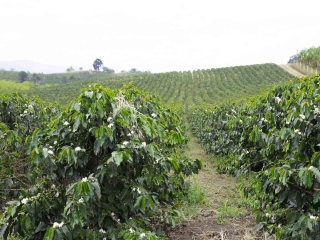
Ethiopia has the most diversified coffee planting system in the world, including forest coffee, semi-forest coffee, pastoral coffee and plantation coffee. 90% of the coffee in Ethiopia comes from pastoral, forest and semi-forest, but large-scale entrepreneurial cultivation in Ethiopia is indeed very rare.
The Development of Blue Mountain Coffee the cultivation of high quality blue mountain boutique coffee beans
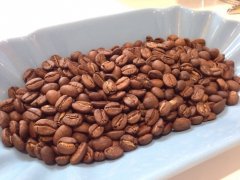
Jamaica, the origin of Blue Mountain Coffee, gets its name from the Blue Mountains surrounded by the Caribbean Sea. Sour, sweet, bitter taste are very harmonious and have excellent flavor and aroma, suitable for individual coffee, suitable for moderate roasting. Only coffee produced on 6000 hectares above 1600 meters above sea level can be called Blue Mountain. Blue Mountain Coffee introduces the origin of Blue Mountain Coffee, Jamaica, named after the Caribbean Ring.
Yunnan tin card raw bean batch occurs bean price Yunnan authentic small grain coffee Arabica tin truck
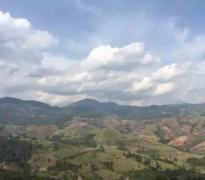
For professional baristas, please follow the coffee workshop (Wechat official account cafe_style) 01 | A brief introduction to the producing area: small-grain coffee is suitable for growing in the mountains at an altitude of 800,1800m. If the altitude is too high, it will taste sour, and if it is too low, it will taste bitter. Small grains of coffee are mostly planted in dry and hot valleys about 1100 meters above sea level, so they are moderately sour, rich and mellow. Many areas in Yunnan are suitable for small.

Introduction to Coffee production area of Coffee Manor in Papua New Guinea there are many coffee beans above sea level.
For the exchange of professional baristas, please follow the coffee workshop (Wechat official account cafe_style) Coffee production area of Chimeier Manor, Papua New Guinea. How much coffee beans are above sea level? name: Chateau Chimeier, Papua New Guinea. Pearl round bean cup test 92 points (Papua New Guinea Kimel PB) production area: the western region Goroka Highlands near the Mt Hagen Mountains Wa

Description of the Flavor of the planting area of the Tianyi Manor in Nicaragua introduction to the History of the planting Variety Manor
For professional baristas, please follow the coffee workshop (Wechat official account cafe_style). The farm is located in Dipilto and grows coffee on 10 plots over 1350 meters above sea level. When Misael Sauceda Olivera, the current owner of the estate, inherited the estate from his father, Porfirio Sauceda, there were only two coffee plantations.

Authentic Yunnan small-grain coffee brewing parameters suggest Yunnan small-grain coffee how to brew and how to bake?
Professional coffee knowledge exchange more coffee bean information please follow the coffee workshop (Wechat official account cafe_style) Yunnan small coffee how to brew 01 | production area profile small coffee is suitable to grow in the mountain area of 8001800 meters above sea level, if the altitude is too high, the taste is sour, too low, the taste is bitter. Small grains of coffee are mostly planted in dry and hot valleys about 1100 meters above sea level, so they are moderately sour.